Don't Buy Until You Read This: Asus Zenbook A14 A16 2026 vs Tp Link Deco Be23
Introduction
Buying new tech can feel overwhelming: should the first upgrade be a sleeker laptop to boost productivity on the go, or a stronger mesh Wi‑Fi system to eliminate dead zones at home? This article compares two products often considered by shoppers setting up a modern home office or hybrid study setup: the Asus Zenbook A14 / A16 (2026) family of ultraportable laptops and the TP‑Link Deco BE23 mesh system. Although one is a compute device and the other a networking product, the choice between investing in a new laptop or improved home networking is a practical tradeoff many buyers face.
The goal here is to provide a clear, practical assessment: who benefits most from each product, real‑world scenarios where one purchase makes more immediate impact than the other, and the important technical and lifestyle considerations buyers typically care about. This is not a spec sheet; it’s a buyer‑focused analysis to help decide what to buy — or whether both are necessary.

Asus Zenbook A14 / A16 (2026) — Detailed Review and Analysis
The Zenbook line has long positioned itself as a thin, light, and well‑built option for students, professionals, and content creators who need balanced performance. The A14 and A16 variants address slightly different priorities: the smaller chassis emphasizes portability and battery life, while the larger model usually offers more display real estate for multitasking and creative work.
Design and Build
Asus typically focuses on a premium aluminum chassis, compact footprint, and refined hinge designs. For buyers who commute, travel, or move between home, office, and classroom, the A14’s smaller size and lighter weight are practical advantages. The A16 trades some portability for screen size and a roomier keyboard—useful for longer typing sessions.
Display and Productivity
In real‑world use, display size and quality directly influence productivity. The A14 is convenient for note taking and email, while the A16’s larger panel helps when editing documents side‑by‑side, working in spreadsheets, or doing light photo and video editing. Buyers who value color accuracy for creative work should confirm the panel type and factory calibration on the exact configuration they consider, because Zenbook options can vary by market and SKU.
Performance and Thermals
The 2026 Zenbook models are designed to balance everyday productivity with occasional heavier workloads. In practice, they handle web browsing, office suites, video conferencing, and light content creation easily. For sustained heavy rendering or gaming, thin ultrabooks can reach thermal limits and may throttle under prolonged peak loads. Buyers who plan regular high‑intensity tasks should compare configurations and consider external cooling options or a more performance‑focused machine.
Battery Life and Charging
Battery endurance is a frequent deciding factor. The smaller Zenbook typically prioritizes longer runtime, making it attractive for full workdays away from a power outlet. Fast charging and USB‑C power delivery are useful in everyday life: they enable quick top‑ups between meetings and simplify accessory compatibility. Buyers should look for advertised runtime under mixed‑use scenarios rather than just manufacturer maximums.
Discover deals on Laptops & Computers — updated daily.
Shop Amazon →Keyboard, Trackpad, and Webcam
For remote work and classes, a comfortable keyboard and reliable webcam are essential. Zenbooks usually offer tactile keyboards and accurate trackpads. Webcam quality can vary; if frequent video calls are a must, test or review sample call quality to ensure acceptable low‑light performance and microphone pickup.
Ports and Expandability
Port selection matters: users who need external displays, wired networking, or multiple USB accessories should confirm available ports or plan for dongles. The A16’s larger chassis often accommodates more varied ports, reducing reliance on hubs for some buyers.
Real‑World Use Cases
- Students: A14 is ideal for note taking, research, and portability between classes.
- Remote professionals: A16 benefits those who multitask with many windows or present frequently during video calls.
- Light creators: Both models are fine for photo edits and short video edits; for longer, more intensive projects, a workstation or desktop may be preferable.
TP‑Link Deco BE23 — Detailed Review and Analysis
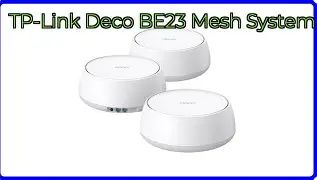
Modern home networks have to support more devices and higher bandwidth than ever before. Mesh Wi‑Fi systems aim to deliver consistent coverage across a home by placing multiple nodes to eliminate dead zones and manage device handoffs. The Deco BE23 is a contemporary mesh offering that targets users looking for easier coverage extension and simplified setup.
Coverage and Performance
Mesh systems like the Deco BE23 are most valuable in multi‑room homes, apartments with odd layouts, or households with many connected devices (smartphones, laptops, smart TVs, IoT). In these real‑world contexts, a single router in the living room often cannot provide strong, reliable signal to bedrooms or home offices. The Deco BE23’s advantage is creating a single network name and allowing devices to roam seamlessly between nodes.
Setup and Management
Ease of setup is a major selling point for mesh systems. TP‑Link’s app‑based configuration typically walks users through placement, firmware updates, and device management. This is helpful for buyers who are not comfortable with manual router configuration. Parental controls, guest networks, and device prioritization are common features that help families manage access and bandwidth distribution.
Throughput and Latency
Home gamers and video‑call users care most about real throughput and latency. Mesh systems can add slight overhead compared to a wired connection, but well‑designed mesh nodes minimize latency while maximizing usable throughput across a home. Placement and backhaul options (wireless or wired Ethernet) determine real performance; wired backhaul between nodes yields the best results, while purely wireless deployments depend heavily on node placement and interference.
Shop the latest Laptops & Computers picks on Amazon.
Shop Amazon →Security and Firmware
Regular firmware updates and features like WPA3, network segmentation, and automatic threat detection are important. Buyers should check the vendor’s track record for timely updates and the robustness of security features included in the base firmware.
Real‑World Use Cases
- Large homes or multi‑story houses: Mesh systems prevent Wi‑Fi dead spots and ensure reliable video calls from upstairs rooms.
- Shared apartments: Mesh provides uniform coverage for multiple occupants streaming or working simultaneously.
- Smart home setups: Devices spread throughout a house benefit from a consistent, managed network.
Pros & Cons
Asus Zenbook A14 / A16 (2026)
- Pros: Lightweight and portable designs; solid build quality; suitable for everyday productivity and light creative work; usually very good battery life in smaller models; refined keyboards and trackpads.
- Cons: Thin designs can limit thermal headroom for sustained heavy tasks; port selection may require dongles; configuration and display options vary by SKU so buyers must verify exact specs before purchasing.
TP‑Link Deco BE23
- Pros: Simplifies whole‑home Wi‑Fi coverage; easy app‑based setup; useful management features (guest networks, parental controls, device prioritization); scales with additional nodes.
- Cons: Performance depends on node placement and home layout; wireless backhaul can reduce throughput compared to wired backhaul; advanced users may find app‑only interfaces limiting compared to full router firmware.
At‑a‑Glance Comparison
| Category | Asus Zenbook A14 / A16 (2026) | TP‑Link Deco BE23 |
|---|---|---|
| Primary Purpose | A portable personal computer for work, study, and light creative tasks. | A mesh Wi‑Fi system to extend and stabilize home wireless coverage. |
| Best For | Mobile productivity, students, travel, hybrid workers. | Homes with dead zones, multiple users streaming or gaming, smart home setups. |
| Mobility | Designed to be portable and carried daily. | Stationary devices placed around the home. |
| Setup Complexity | Plug and play; some initial OS and software setup required. | App‑guided; typically simple for non‑technical users. |
| Key Buyer Considerations | Display size, battery life, ports, thermal performance, configuration options. | Coverage area, node placement, backhaul options, firmware updates, app features. |
| Value Impact | Directly improves individual productivity and mobility. | Improves network experience for all devices in a household. |
| Upgrade Path | Limited internal upgrades; choose configuration carefully. | Nodes can be added to expand coverage; can replace existing router if needed. |
Buying Guide — How to Choose Between a New Laptop and a Mesh System
Deciding whether to buy the Zenbook or the Deco — or both — depends on the immediate pain points and longer‑term priorities. Below are practical questions and criteria to guide the decision.
Step 1: Identify the Immediate Problem
- If productivity is limited by an aging, slow, or heavy laptop that makes daily work cumbersome, prioritize the Zenbook.
- If video calls drop in certain rooms, streaming buffers frequently, or multiple devices struggle to stay connected, a mesh system like the Deco BE23 is likely to provide more visible impact.
Step 2: Match Features to Use Cases
- For frequent travel and on‑site work: choose a smaller, lighter laptop such as the A14.
- For a home office requiring large windows, multiple displays, or longer typing sessions: consider the A16 for its larger screen and keyboard comfort.
- For multi‑user households or houses with thick walls: opt for a mesh system. Look for models that support wired backhaul if the home has Ethernet runs.
Step 3: Budget Allocation and Value Tradeoffs
If the budget is limited, consider which purchase affects daily life more. A new laptop can immediately reduce friction for a single user; a mesh system improves connectivity for everyone in the home. Also consider combining investments: modest improvements to both (e.g., an entry‑level Zenbook configuration and a single Deco node) can sometimes yield a better overall experience than a single high‑end purchase.
Step 4: Future‑Proofing and Compatibility
- For laptops: verify the display resolution and color profile if creative work is planned; check port selection for external displays and docking solutions.
- For mesh systems: prioritize firmware update cadence and security features; confirm compatibility with existing ISP equipment and whether the unit can be used as an access point if the user prefers a separate router.
Step 5: Setup Tips and Real‑World Considerations
- Place mesh nodes in open areas, roughly halfway between the router and the dead zone, avoiding thick concrete walls or appliances that cause interference.
- For laptops, test keyboard and webcam in store whenever possible; battery life under real workloads can differ from marketing claims, so read reviews covering mixed‑use scenarios.
- If latency is critical (online competitive gaming or real‑time production collaboration), prioritize wired connections where possible; for laptops, consider a docking station that allows Ethernet and multiple displays.
Conclusion
Both the Asus Zenbook A14 / A16 (2026) and the TP‑Link Deco BE23 address daily frustrations — one by improving personal compute mobility and comfort, the other by calming wireless chaos across a home. The right choice depends on whether the buyer’s biggest bottleneck is on the device level (slow laptop, poor battery, cramped display) or at the network level (dead zones, unstable video calls, poor streaming).
In short: choose the Zenbook if the priority is personal productivity, portability, and a direct improvement to one person’s workflow. Choose the Deco BE23 if the priority is reliable connectivity for multiple users and devices across the home. Many households benefit most from a balanced approach: a capable laptop for the primary user plus a mesh system to ensure everyone else has consistent, fast access. By assessing immediate pain points, future needs, and how each product fits into day‑to‑day life, buyers can make a purchase that reduces friction and improves productivity in meaningful, lasting ways.